

“We start by thinking about how the space will be used.”Commercial spacesSeoul · Gyeonggi · Incheon
Seungbo ShimTeam Lead · Instructor
Commercial space specialist
We buildfilm installersin 8 days
Kooda Academy is an 8-day small-group course for people moving into interior film (architectural wrap) installation as a full-time trade. Kooda runs an interior film distribution store, installation crews and training under one company — so class is about what is happening on job sites right now, not a textbook.
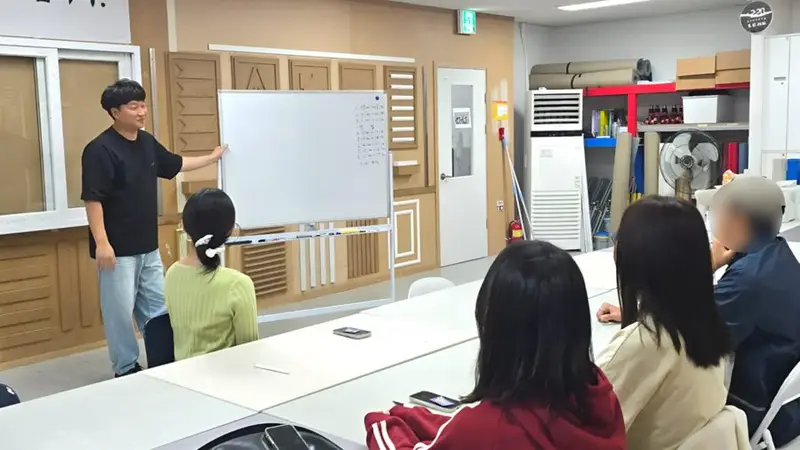
Many beginners are in their 20s and 30s, but people in their 40s, 50s and 60s work in this trade too. You can start without knowing a single tool name. We begin with how to hold the tools, and with 8 or fewer per class the instructor corrects each person's hands one by one. It is a course for people starting this as work, not as a hobby.
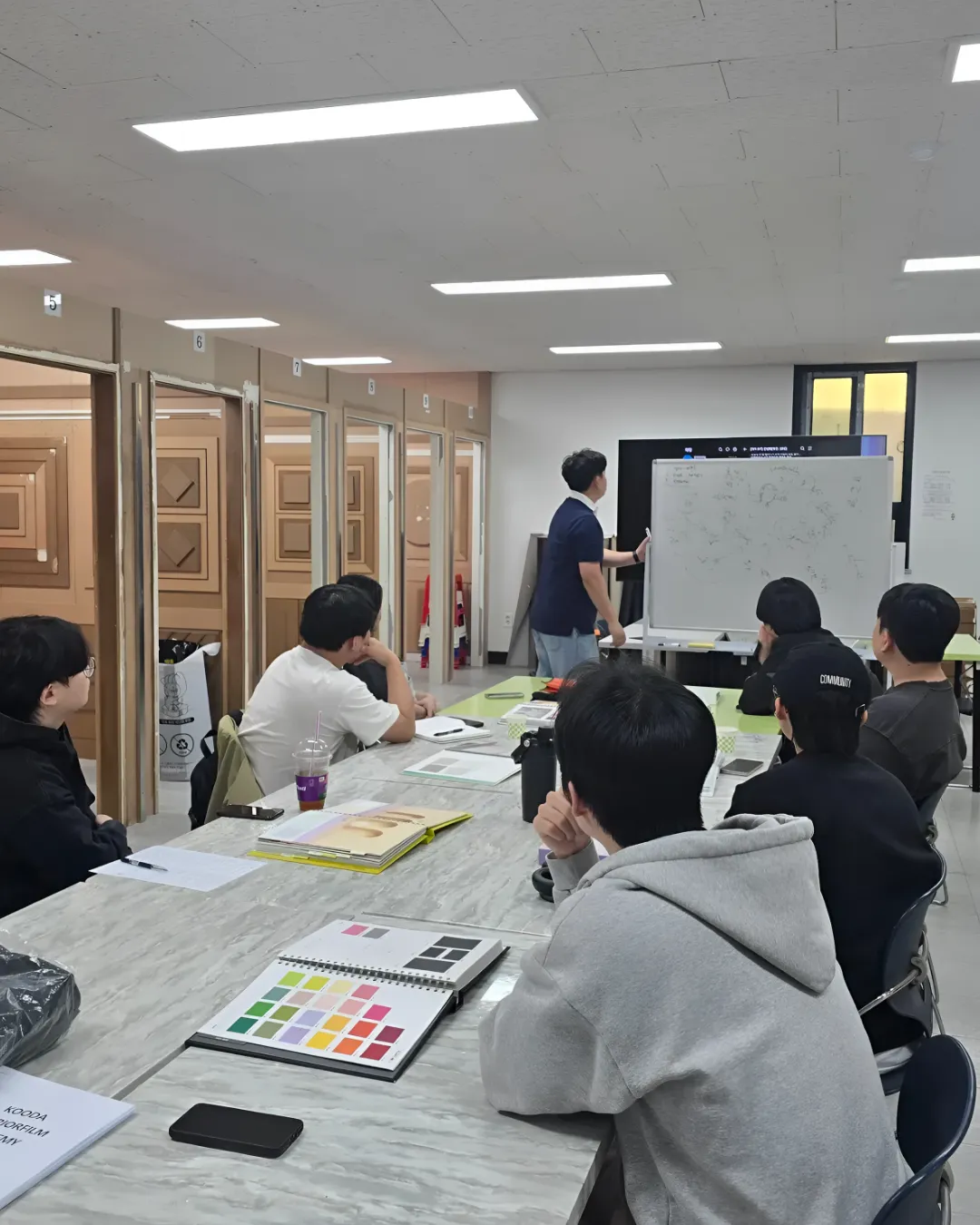
In a practice room of roughly 2,100 sq ft (200 m²), you learn on booth-style mock walls, applying and peeling film on door frames and panels.
Commercial space specialist

Sink and furniture film specialist

High-end and large-scale site specialist

Full-home residential specialist

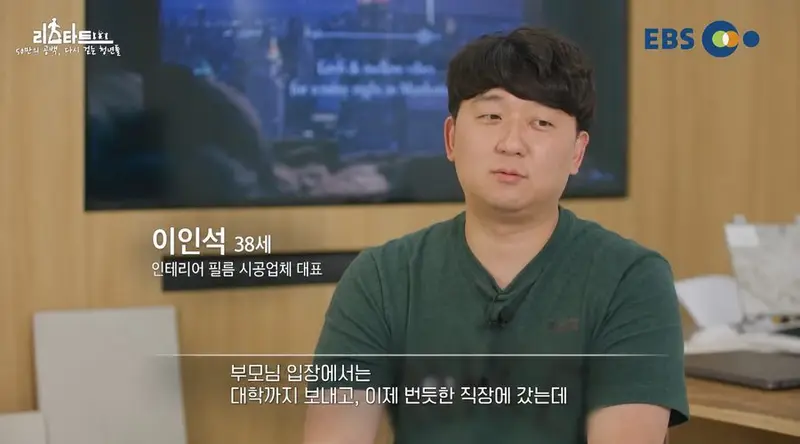
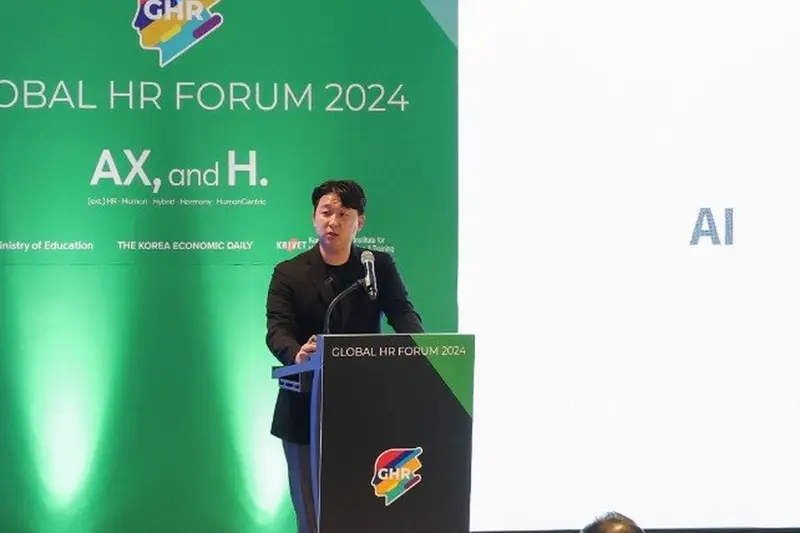
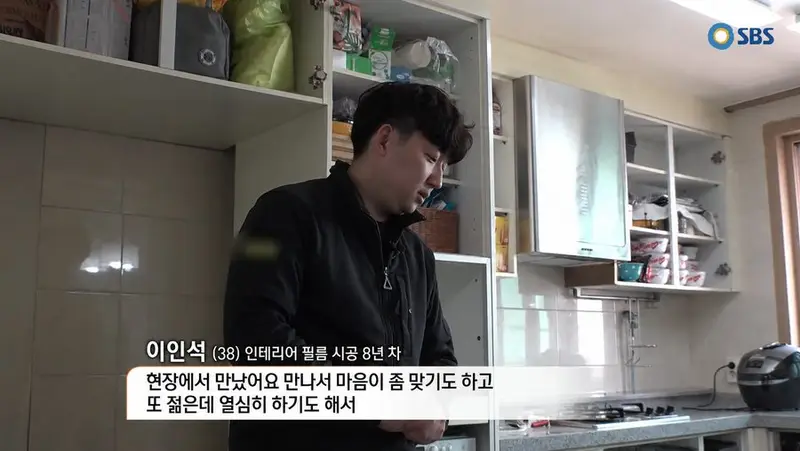
Day 1 at Kooda Academy is an industry lecture by CEO Inseok Lee. A former installer who applied film on job sites for more than 10 years, he walks through the whole industry from his own experience running education, distribution, installation and interior design today. From Day 2, Kooda crew leads who still go out to job sites do the teaching.

What the teacher actually does for a living sets the depth of the class. The Day 1 lecture goes beyond application technique: material pricing and distribution, estimates and contracts, the standards of high-end job sites, and how an entire interior project flows — all from one person's experience.
OthersSome schools run a single academy course.
KoodaWe run an official government-funded program and the academy together. (Kooda Interior Film School)
OthersSome distribute as second-tier dealers.
KoodaWe run a master distributorship contracted directly with the manufacturer. (KCC master distributor for Seoul)
OthersSome have an installation crew.
KoodaWe run the dedicated film installation crews for high-end interior design brands such as Owl Design and Apartmentary.
OthersThe CEO says no one else in the country also does residential interiors directly.
KoodaThrough Kooda Design, we also design and build residential interiors.
CEO Inseok Lee says Kooda is the only interior film school in Korea that directly runs all four: education, distribution, installation and interior design.“The only one in Korea” and “no one else in the country” are the CEO's own view.
Click a video to play it from YouTube.
Weekdays, 9 a.m.–4 p.m., for 8 days. We spend the most time on surface prep — the first thing anyone checks on site.
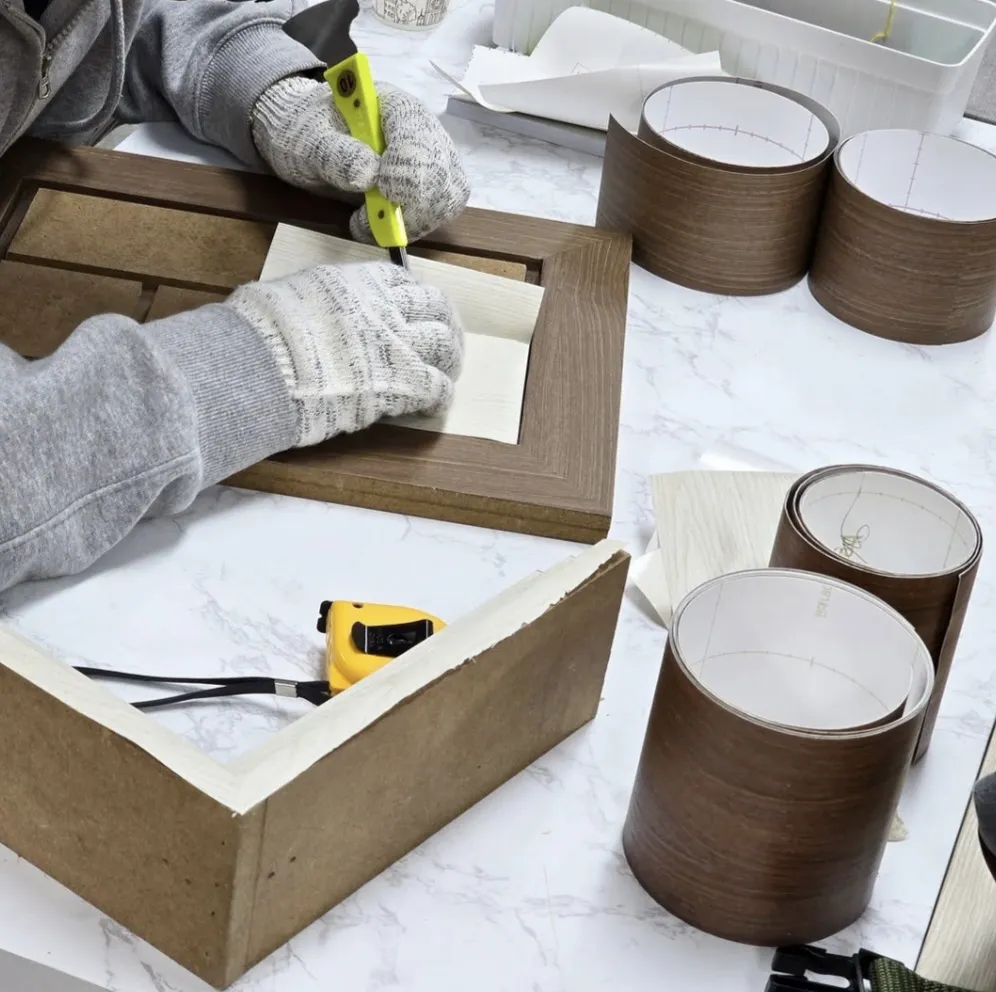
You apply film yourself: flat surfaces, surface prep, cutting, window frames and baseboards, door frames and panels, through to curves and heat forming.
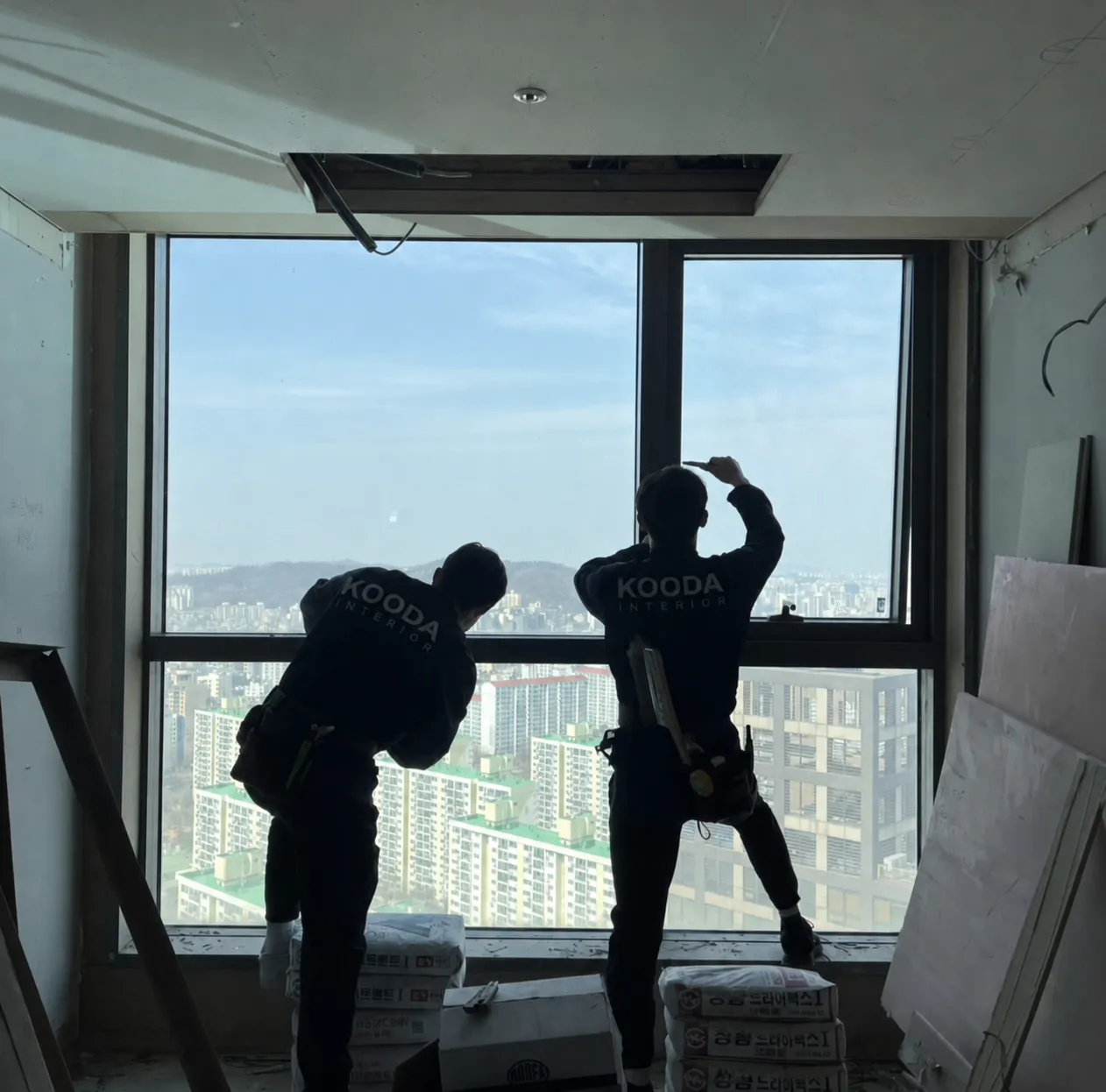
Field Entry Program. After graduating, you go out with a Kooda installation crew and clear the first-job-site hurdle together.
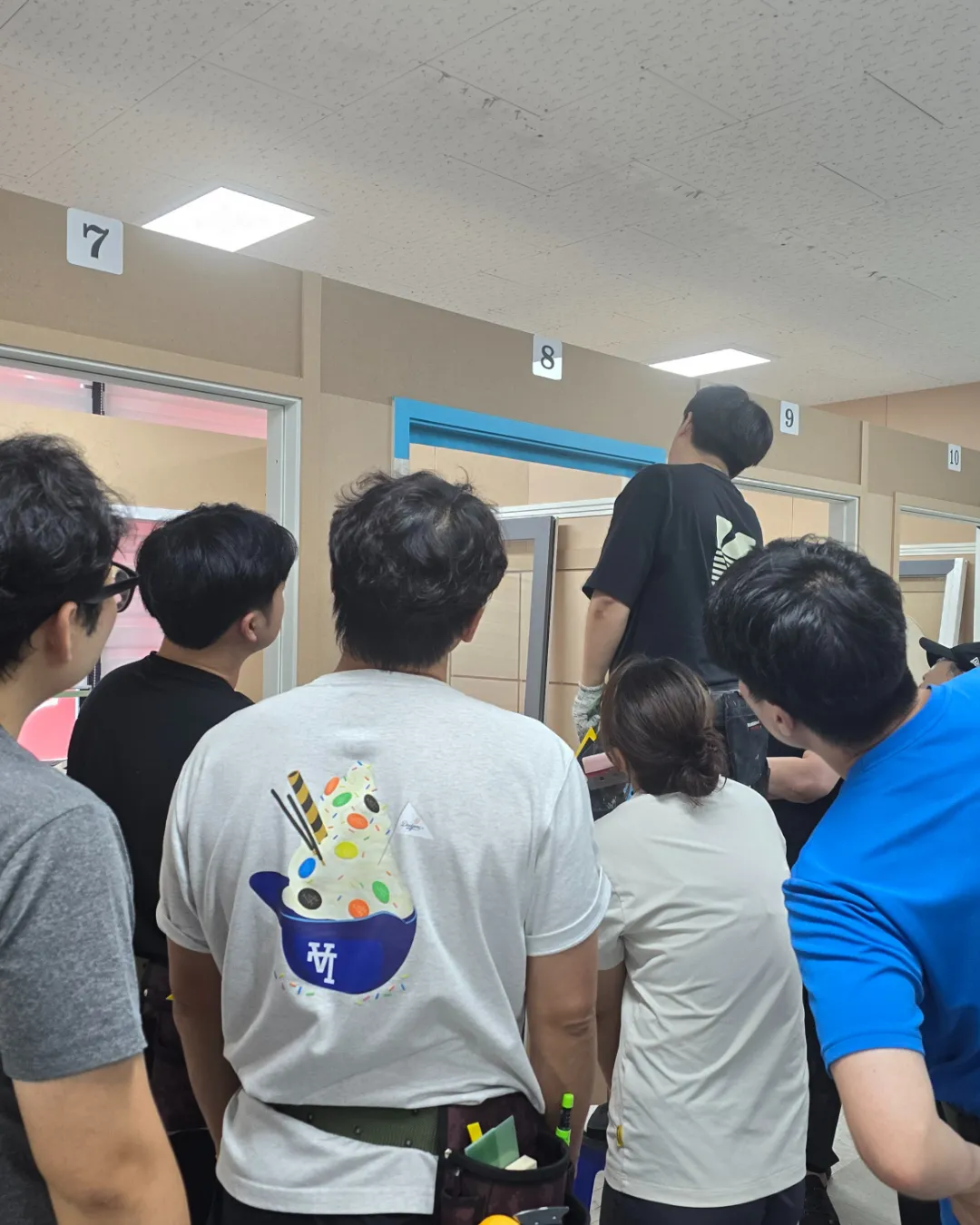
The interior film market, estimates and contracts in practice, and handling after-sales service. The day that sets the direction for all 8 days.
Learn how to use the basic tools and how the materials behave, then practice basic application.
Practice the principles and groundwork of applying film to flat areas.
Priming, putty, sanding. Learn the prep work that decides the quality of the finish.
Learn to measure and cut so you waste less film and make fewer mistakes.
Practice window frames and baseboards, plus the prep work of removing old silicone.
Repeat squeegee work and finish with door frames and panels.
Focused practice on the advanced areas where skill differences show.
You get priority placement on a Kooda installation crew's job site. You go out once with the crew leads you met in class, and you are paid KRW 100,000 for the day.
Shared crew schedules, questions on estimates and methods, and materials Kooda distributes directly. You don't start alone.
Buy the materials Kooda distributes directly at graduate-only prices, lower than the regular installer rate.
Hiring and job requests that come in to Kooda Academy are shared in the graduates' group chat.
Whenever you get stuck in real installation work, you can keep asking the instructors and the CEO for feedback.
Take additional classes, such as silicone techniques, at a graduate-only price.
The Field Entry Program helps you adapt to the job site; it does not guarantee employment or income. Timing and conditions are explained during consultation.
“The talks on estimating and contracts were the most realistic part.”
I thought that once I learned the skills I could start earning right away, but I learned that a bad estimate can cost you a whole day. It was great to learn not just installation but also the standards for taking on jobs.
“I realized how important it is to learn it right the first time.”
I learned that if basic habits like cutting, using the squeegee, and heat treatment are formed wrong at the start, they are hard to fix later. Learning the job-site method from the very beginning was the biggest advantage.
“Doing door-frame work taught me that film is no easy job.”
I felt I could manage flat surfaces well enough, but working on door frames and bent edges made me feel the real difference in skill. It is hard, but with repetition I slowly developed a feel for it.
“It gave me a solid standard for preparing a film business in the U.S.”
While considering an interior film business in the U.S., I found KOODA ACADEMY. Learning the Korean-style installation standards, estimating methods, customer service, and defect response, I built a standard I can apply on overseas job sites as well.
“I learned Korean-style standards while preparing to work in Canada.”
I took the course because I wanted to do interior film installation in Canada. Beyond just the application technique, I was able to learn surface preparation, finishing standards, and how to build customer trust, which helped me prepare for overseas installation work.
“It felt less like learning a skill and more like preparing for a profession.”
Eight days felt short, but I came away knowing exactly what film installation work is. I also got clear on which areas to keep practicing after graduation and how to build up field experience.
“I stopped being afraid of callbacks.”
At first I thought any defect was automatically a disaster, but once I learned to distinguish the causes and the standards for responding, it looked far more manageable. I came to understand what accountable installation really means.
“The real-world projects are what I remember most.”
Practicing inside the school felt different from the atmosphere of a real job site. Through the field placement, I was able to experience work speed, teamwork, and finishing standards firsthand, which was great.
“Using tools properly came before buying lots of them.”
At first I thought I needed a lot of equipment to do well. But through the course I realized that just mastering the basics of the squeegee, knife, and heat gun already changes the result.
“Even after the course ended, it was clear what I should practice.”
Rather than a vague “just apply a lot,” it was great that they gave step-by-step practice direction for flat surfaces, corners, door frames, and panels. Even when practicing alone, I had a standard to follow.
“With so many real job-site stories, the classes felt realistic.”
More than just how to apply film neatly, it was valuable to hear why mistakes happen on site and where costs blow up. It felt like I learned the standards first, before the techniques.
Graduate numbers and the field-entry rate are Kooda's own count.
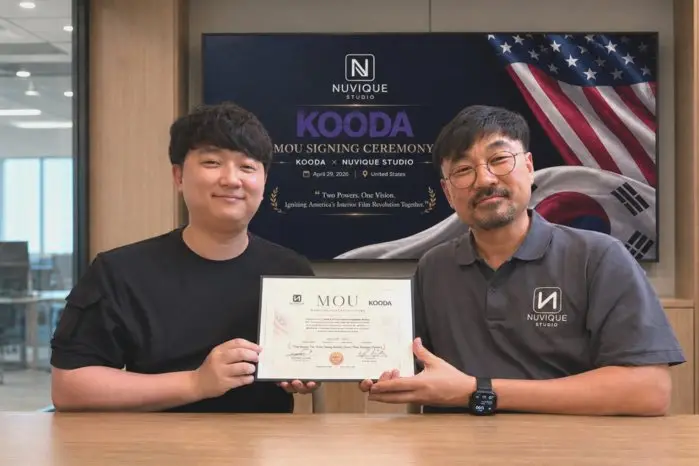

 NUVIQUE STUDIOUnited StatesInstallation · education · distribution MOULos Angeles, USA
 KCCKCC Glass interior filmWood, solid color, pattern and metal lineupsKorea
 LX Z:INLX interior filmFormerly LG HausysKorea
 Hyundai L&CHyundai L&CA balance of design and durabilityKorea
 HansolHansolArchitectural and industrial filmsKorea
 YounglimYounglimWood and wood-tone colorsKorea
 YerimYerimA wide range of patterns and colorsKorea
 SamsungSamsung (SOIF Global)A long-running Korean brand lineupKorea
 WoodinWoodinWood-grain interior filmKorea
 Hyundai SheetHyundai SheetMulti-purpose for commercial and interior useKorea

 RenolitRENOLITGerman interior film brandGermany

 SangetsuSangetsuJapanese interior film brandJapan
It is an 8-day small-group course for people starting interior film installation as a career. Classes are capped at 8 and run weekdays from 9 a.m. to 4 p.m. at our training center in Bucheon, Gyeonggi-do, South Korea. Kooda crew leads who work on job sites teach the course, and CEO Inseok Lee gives the industry lecture on Day 1.
Yes. We start with the names of the tools and how to hold them. The course moves in steps — tools and materials on Day 2, flat surfaces on Day 3, surface prep on Day 4 — and with 8 or fewer per class the instructor corrects each person one by one.
The standard for the 8 days is not the length of time but “the fundamentals needed to be put on a job site.” After graduating, you join a Kooda installation crew through the Field Entry Program and experience your first job site. However, the course does not guarantee employment or income, and your growth afterward depends on your own practice and field experience.
It is Kooda's own program (called “Hyeontupeu” in Korean) in which graduates go out to a real job site with a Kooda installation crew. Participants are selected based on attendance, attitude in class and an assessment of fundamentals. It takes place once, and you are paid KRW 100,000 for the day you go out with the crew.
In Korea, interior film installation is a trade with no dedicated license. That is why job sites look at fundamentals such as surface prep and finishing rather than credentials. Kooda Academy teaches fundamentals, not a certificate.
Tuition and the next class schedule are explained during consultation. Please contact us through our KakaoTalk channel or by phone at +82-32-673-7778.
Yes. Students have come from all over Korea — Jeju, Wando, Gwangju, Daegu, Busan, Geoje, Yeosu, Wonju and more — and some from the USA and Canada. Because the course is 8 days, many students book lodging nearby while they attend.
At the Kooda Academy training center, 5F, 235 Bucheon-ro, Wonmi-gu, Bucheon-si, Gyeonggi-do, South Korea, weekdays from 9:00 a.m. to 4:00 p.m. It is a 1-minute walk from Chunui Station on Seoul Subway Line 7.
Tuition is explained during consultation. Tell us what you do now and why you want to learn, and we'll first help you see whether this is the right course for you.